



GeForce RTX 2080 Ti
Popular choices:
GeForce RTX 4060 Laptop GPU
Popular choices:
Performance Spectrum - GPU
About G3D Mark
G3D Mark is a standard benchmark that measures graphics performance in real-world gaming scenarios. It simplifies comparing cards from different brands, where higher scores directly correlate with better fps and smoother gaming experiences.
Head-to-Head Verdict, Benchmarks, Value & Long-Term Outlook
This comparison brings together gaming FPS, raw graphics performance, VRAM, feature set, power efficiency, pricing context, and long-term value so you can see which GPU actually makes more sense.
GeForce RTX 2080 Ti
2018Why buy it
- ✅3.2% more average FPS across 45 tracked games in our benchmark data.
- ✅Delivers 100+% more G3D Mark for each dollar spent, at 21.5 vs 0 G3D/$ ($999 MSRP vs Unknown MSRP).
- ✅300% more Tensor Cores for AI-powered features like DLSS and frame generation, which can increase overall FPS in supported games (544 vs 136).
- ✅37.5% more VRAM for high-resolution textures and newer games (11 GB vs 8 GB).
Trade-offs
- ❌No equivalent frame-generation stack like DLSS 3.5 + Frame Generation (2023).
- ❌Weaker long-term outlook: GeForce RTX 4060 Laptop GPU is the safer future-proof pick thanks to newer hardware and better gaming feature support.
- ❌56.3% higher power demand at 250W vs 160W.
GeForce RTX 4060 Laptop GPU
2023Why buy it
- ✅Access to a newer frame-generation stack with DLSS 3.5 + Frame Generation (2023).
- ✅More future proof: Ada Lovelace (2022−2024) on 5nm with a newer platform for upcoming games.
- ✅Draws 160W instead of 250W, a 90W reduction.
Trade-offs
- ❌Lower average FPS than GeForce RTX 2080 Ti across 45 tracked games in our benchmark data.
- ❌Less VRAM, with 8 GB vs 11 GB for high-resolution textures and newer games.
- ❌Fewer Tensor Cores for AI-powered features like DLSS and frame generation (136 vs 544), which can reduce FPS gains in supported games.
- ❌Lower G3D Mark per dollar, at 0 vs 21.5 G3D/$ (Unknown MSRP vs $999 MSRP).
GeForce RTX 2080 Ti
2018GeForce RTX 4060 Laptop GPU
2023Why buy it
- ✅3.2% more average FPS across 45 tracked games in our benchmark data.
- ✅Delivers 100+% more G3D Mark for each dollar spent, at 21.5 vs 0 G3D/$ ($999 MSRP vs Unknown MSRP).
- ✅300% more Tensor Cores for AI-powered features like DLSS and frame generation, which can increase overall FPS in supported games (544 vs 136).
- ✅37.5% more VRAM for high-resolution textures and newer games (11 GB vs 8 GB).
Why buy it
- ✅Access to a newer frame-generation stack with DLSS 3.5 + Frame Generation (2023).
- ✅More future proof: Ada Lovelace (2022−2024) on 5nm with a newer platform for upcoming games.
- ✅Draws 160W instead of 250W, a 90W reduction.
Trade-offs
- ❌No equivalent frame-generation stack like DLSS 3.5 + Frame Generation (2023).
- ❌Weaker long-term outlook: GeForce RTX 4060 Laptop GPU is the safer future-proof pick thanks to newer hardware and better gaming feature support.
- ❌56.3% higher power demand at 250W vs 160W.
Trade-offs
- ❌Lower average FPS than GeForce RTX 2080 Ti across 45 tracked games in our benchmark data.
- ❌Less VRAM, with 8 GB vs 11 GB for high-resolution textures and newer games.
- ❌Fewer Tensor Cores for AI-powered features like DLSS and frame generation (136 vs 544), which can reduce FPS gains in supported games.
- ❌Lower G3D Mark per dollar, at 0 vs 21.5 G3D/$ (Unknown MSRP vs $999 MSRP).
Quick Answers
So, is GeForce RTX 2080 Ti better than GeForce RTX 4060 Laptop GPU?
Which one is more future-proof for 2026 and beyond?
Which one is the smarter buy today, not just the cheaper card?
When does GeForce RTX 4060 Laptop GPU make more sense than GeForce RTX 2080 Ti?
Games Benchmarks
Real-world benchmarks and performance projections based on comprehensive hardware analysis and comparative metrics. Values represent expected performance on High/Ultra settings at 1080p, 1440p, and 4K. Modeled using a Ryzen 7 9800X3D reference profile to minimize specific CPU bottlenecks.
Note: Performance behavior can vary per game. Specific architectures may perform better or worse depending on game engine optimizations and API implementation.
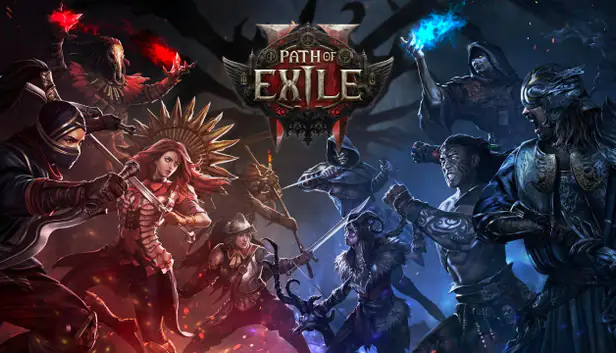
Path of Exile 2
| Preset | GeForce RTX 2080 Ti | GeForce RTX 4060 Laptop GPU |
|---|---|---|
| 1080p | ||
| low | 158 FPS | 177 FPS |
| medium | 145 FPS | 162 FPS |
| high | 127 FPS | 142 FPS |
| ultra | 111 FPS | 124 FPS |
| 1440p | ||
| low | 133 FPS | 143 FPS |
| medium | 111 FPS | 118 FPS |
| high | 96 FPS | 101 FPS |
| ultra | 85 FPS | 93 FPS |
| 4K | ||
| low | 75 FPS | 93 FPS |
| medium | 63 FPS | 79 FPS |
| high | 50 FPS | 66 FPS |
| ultra | 44 FPS | 59 FPS |

Counter-Strike 2
| Preset | GeForce RTX 2080 Ti | GeForce RTX 4060 Laptop GPU |
|---|---|---|
| 1080p | ||
| low | 414 FPS | 409 FPS |
| medium | 366 FPS | 344 FPS |
| high | 312 FPS | 280 FPS |
| ultra | 264 FPS | 223 FPS |
| 1440p | ||
| low | 293 FPS | 261 FPS |
| medium | 249 FPS | 217 FPS |
| high | 215 FPS | 180 FPS |
| ultra | 178 FPS | 147 FPS |
| 4K | ||
| low | 136 FPS | 112 FPS |
| medium | 120 FPS | 91 FPS |
| high | 101 FPS | 76 FPS |
| ultra | 81 FPS | 59 FPS |

League of Legends
| Preset | GeForce RTX 2080 Ti | GeForce RTX 4060 Laptop GPU |
|---|---|---|
| 1080p | ||
| low | 866 FPS | 783 FPS |
| medium | 703 FPS | 626 FPS |
| high | 614 FPS | 522 FPS |
| ultra | 484 FPS | 392 FPS |
| 1440p | ||
| low | 673 FPS | 587 FPS |
| medium | 541 FPS | 470 FPS |
| high | 460 FPS | 392 FPS |
| ultra | 363 FPS | 294 FPS |
| 4K | ||
| low | 457 FPS | 392 FPS |
| medium | 370 FPS | 313 FPS |
| high | 309 FPS | 261 FPS |
| ultra | 242 FPS | 196 FPS |

Valorant
| Preset | GeForce RTX 2080 Ti | GeForce RTX 4060 Laptop GPU |
|---|---|---|
| 1080p | ||
| low | 602 FPS | 775 FPS |
| medium | 534 FPS | 626 FPS |
| high | 449 FPS | 522 FPS |
| ultra | 412 FPS | 392 FPS |
| 1440p | ||
| low | 500 FPS | 587 FPS |
| medium | 442 FPS | 470 FPS |
| high | 372 FPS | 392 FPS |
| ultra | 333 FPS | 294 FPS |
| 4K | ||
| low | 315 FPS | 374 FPS |
| medium | 286 FPS | 313 FPS |
| high | 267 FPS | 261 FPS |
| ultra | 236 FPS | 196 FPS |
Technical Specifications
Side-by-side comparison of GeForce RTX 2080 Ti and GeForce RTX 4060 Laptop GPU

GeForce RTX 2080 Ti
GeForce RTX 2080 Ti
The GeForce RTX 2080 Ti is manufactured by NVIDIA. It was released in September 20 2018. It features the Turing architecture. The core clock ranges from 1350 MHz to 1545 MHz. It has 4352 shading units. The thermal design power (TDP) is 250W. Manufactured using 12 nm process technology. It features 68 dedicated ray tracing cores for enhanced lighting effects. G3D Mark benchmark score: 21,513 points. Launch price was $999.
GeForce RTX 4060 Laptop GPU
GeForce RTX 4060 Laptop GPU
The GeForce RTX 4060 Laptop GPU is manufactured by NVIDIA. It was released in May 18 2023. It features the Ada Lovelace architecture. The core clock ranges from 2310 MHz to 2535 MHz. It has 4352 shading units. The thermal design power (TDP) is 160W. Manufactured using 5 nm process technology. It features 34 dedicated ray tracing cores for enhanced lighting effects. G3D Mark benchmark score: 17,400 points. Launch price was $399.
Graphics Performance
In G3D Mark, the GeForce RTX 2080 Ti scores 21,513 versus the GeForce RTX 4060 Laptop GPU's 17,400 — the GeForce RTX 2080 Ti leads by 23.6%. The GeForce RTX 2080 Ti is built on Turing while the GeForce RTX 4060 Laptop GPU uses Ada Lovelace, both on 12 nm vs 5 nm. Shader units: 4,352 (GeForce RTX 2080 Ti) vs 4,352 (GeForce RTX 4060 Laptop GPU). Raw compute: 13.45 TFLOPS (GeForce RTX 2080 Ti) vs 22.06 TFLOPS (GeForce RTX 4060 Laptop GPU). Boost clocks: 1545 MHz vs 2535 MHz. Ray tracing: 68 RT cores (GeForce RTX 2080 Ti) vs 34 (GeForce RTX 4060 Laptop GPU) with 544 Tensor cores vs 136.
| Feature | GeForce RTX 2080 Ti | GeForce RTX 4060 Laptop GPU |
|---|---|---|
| G3D Mark Score | 21,513+24% | 17,400 |
| Architecture | Turing | Ada Lovelace |
| Process Node | 12 nm | 5 nm |
| Shading Units | 4352 | 4352 |
| Compute (TFLOPS) | 13.45 TFLOPS | 22.06 TFLOPS+64% |
| Boost Clock | 1545 MHz | 2535 MHz+64% |
| ROPs | 88+83% | 48 |
| TMUs | 272+100% | 136 |
| L1 Cache | 4.3 MB | 4.3 MB |
| L2 Cache | 5.5 MB | 32 MB+482% |
| Ray Tracing Cores | 68+100% | 34 |
| Tensor Cores | 544+300% | 136 |
Advanced Features (DLSS/FSR)
A critical advantage for the GeForce RTX 4060 Laptop GPU is support for DLSS 3.5 + Frame Generation. This allows it to generate entire frames using AI/Algorithms, essentially doubling the frame rate in CPU-bound scenarios or heavy ray-tracing titles. The GeForce RTX 2080 Ti lacks specific hardware/driver support for this native frame generation tier.The GeForce RTX 4060 Laptop GPU supports the newer DLSS 3.5 Super Resolution, whereas the GeForce RTX 2080 Ti is capped at DLSS 2 Super Resolution.
| Feature | GeForce RTX 2080 Ti | GeForce RTX 4060 Laptop GPU |
|---|---|---|
| Upscaling Tech | DLSS 2 Super Resolution | DLSS 3.5 Super Resolution |
| Frame Generation | Not Supported | DLSS 3.5 + Frame Generation |
| Ray Reconstruction | No | Yes (DLSS 3.5) |
| Low Latency | NVIDIA Reflex | NVIDIA Reflex |
Video Memory (VRAM)
The GeForce RTX 2080 Ti comes with 11 GB of VRAM, while the GeForce RTX 4060 Laptop GPU has 8 GB. The GeForce RTX 2080 Ti offers 37.5% more capacity, crucial for higher resolutions and texture-heavy games. Memory bandwidth: 616 GB/s (GeForce RTX 2080 Ti) vs 256 GB/s (GeForce RTX 4060 Laptop GPU) — a 140.6% advantage for the GeForce RTX 2080 Ti. Bus width: 352-bit vs 128-bit. L2 Cache: 5.5 MB (GeForce RTX 2080 Ti) vs 32 MB (GeForce RTX 4060 Laptop GPU) — the GeForce RTX 4060 Laptop GPU has significantly larger on-die cache to reduce VRAM reliance.
| Feature | GeForce RTX 2080 Ti | GeForce RTX 4060 Laptop GPU |
|---|---|---|
| VRAM Capacity | 11 GB+38% | 8 GB |
| Memory Type | GDDR6 | GDDR6 |
| Memory Bandwidth | 616 GB/s+141% | 256 GB/s |
| Bus Width | 352-bit+175% | 128-bit |
| L2 Cache | 5.5 MB | 32 MB+482% |
Display & API Support
DirectX support: 12.1 (GeForce RTX 2080 Ti) vs 12 Ultimate (GeForce RTX 4060 Laptop GPU). Vulkan: 1.2 vs 1.4. OpenGL: 4.6 vs 4.6. Maximum simultaneous displays: 4 vs 4.
| Feature | GeForce RTX 2080 Ti | GeForce RTX 4060 Laptop GPU |
|---|---|---|
| DirectX | 12.1 | 12 Ultimate |
| Vulkan | 1.2 | 1.4+17% |
| OpenGL | 4.6 | 4.6 |
| Max Displays | 4 | 4 |
Media & Encoding
Hardware encoder: 6th Gen NVENC (GeForce RTX 2080 Ti) vs NVENC (8th Gen) (GeForce RTX 4060 Laptop GPU). Decoder: 4th Gen NVDEC vs NVDEC (5th Gen). Supported codecs: MPEG-2,H.264,HEVC (GeForce RTX 2080 Ti) vs H.264,HEVC,AV1,VP9 (GeForce RTX 4060 Laptop GPU).
| Feature | GeForce RTX 2080 Ti | GeForce RTX 4060 Laptop GPU |
|---|---|---|
| Encoder | 6th Gen NVENC | NVENC (8th Gen) |
| Decoder | 4th Gen NVDEC | NVDEC (5th Gen) |
| Codecs | MPEG-2,H.264,HEVC | H.264,HEVC,AV1,VP9 |
Power & Dimensions
The GeForce RTX 2080 Ti draws 250W versus the GeForce RTX 4060 Laptop GPU's 160W — a 43.9% difference. The GeForce RTX 4060 Laptop GPU is more power-efficient. Recommended PSU: 650W (GeForce RTX 2080 Ti) vs 650W (GeForce RTX 4060 Laptop GPU). Power connectors: 2x 8-pin vs Mobile. Typical load temperature: 85°C vs 80°C.
| Feature | GeForce RTX 2080 Ti | GeForce RTX 4060 Laptop GPU |
|---|---|---|
| TDP | 250W | 160W-36% |
| Recommended PSU | 650W | 650W |
| Power Connector | 2x 8-pin | Mobile |
| Length | 267mm | — |
| Height | 116mm | — |
| Slots | 2 | 0-100% |
| Temp (Load) | 85°C | 80°C-6% |
| Perf/Watt | 86.1 | 108.8+26% |
Value Analysis
The GeForce RTX 4060 Laptop GPU is the newer GPU (2023 vs 2018).
| Feature | GeForce RTX 2080 Ti | GeForce RTX 4060 Laptop GPU |
|---|---|---|
| MSRP | $999 | — |
| Codename | TU102 | AD106 |
| Release | September 20 2018 | May 18 2023 |
| Ranking | #66 | #59 |
Top Performing GPUs
The most powerful gpus ranked by G3D Mark benchmark scores.

You May Also Compare
Similar GPU comparisons based on GeForce RTX 2080 Ti and GeForce RTX 4060 Laptop GPU