




GeForce RTX 4070 Ti
Popular choices:
TITAN V CEO Edition
Popular choices:
Performance Spectrum - GPU
About G3D Mark
G3D Mark is a standard benchmark that measures graphics performance in real-world gaming scenarios. It simplifies comparing cards from different brands, where higher scores directly correlate with better fps and smoother gaming experiences.
Head-to-Head Verdict, Benchmarks, Value & Long-Term Outlook
This comparison brings together gaming FPS, raw graphics performance, VRAM, feature set, power efficiency, pricing context, and long-term value so you can see which GPU actually makes more sense.
GeForce RTX 4070 Ti
2023Why buy it
- ✅19.9% more average FPS across 50 tracked games in our benchmark data.
- ✅Delivers 100+% more G3D Mark for each dollar spent, at 39.5 vs 0 G3D/$ ($799 MSRP vs Unknown MSRP).
- ✅Access to a newer frame-generation stack with DLSS 3.5 + Frame Generation (2023).
- ✅More future proof: Ada Lovelace (2022−2024) on 4nm with a newer platform for upcoming games.
Trade-offs
- ❌Less VRAM, with 12 GB vs 31 GB for high-resolution textures and newer games.
TITAN V CEO Edition
2018Why buy it
- ✅160.4% more VRAM for high-resolution textures and newer games (31 GB vs 12 GB).
Trade-offs
- ❌Lower average FPS than GeForce RTX 4070 Ti across 50 tracked games in our benchmark data.
- ❌No equivalent frame-generation stack like DLSS 3.5 + Frame Generation (2023).
- ❌Limited future-proofing: older hardware, 31 GB of VRAM, and weaker feature support mean it will age faster in upcoming AAA games.
- ❌Lower G3D Mark per dollar, at 0 vs 39.5 G3D/$ (Unknown MSRP vs $799 MSRP).
GeForce RTX 4070 Ti
2023TITAN V CEO Edition
2018Why buy it
- ✅19.9% more average FPS across 50 tracked games in our benchmark data.
- ✅Delivers 100+% more G3D Mark for each dollar spent, at 39.5 vs 0 G3D/$ ($799 MSRP vs Unknown MSRP).
- ✅Access to a newer frame-generation stack with DLSS 3.5 + Frame Generation (2023).
- ✅More future proof: Ada Lovelace (2022−2024) on 4nm with a newer platform for upcoming games.
Why buy it
- ✅160.4% more VRAM for high-resolution textures and newer games (31 GB vs 12 GB).
Trade-offs
- ❌Less VRAM, with 12 GB vs 31 GB for high-resolution textures and newer games.
Trade-offs
- ❌Lower average FPS than GeForce RTX 4070 Ti across 50 tracked games in our benchmark data.
- ❌No equivalent frame-generation stack like DLSS 3.5 + Frame Generation (2023).
- ❌Limited future-proofing: older hardware, 31 GB of VRAM, and weaker feature support mean it will age faster in upcoming AAA games.
- ❌Lower G3D Mark per dollar, at 0 vs 39.5 G3D/$ (Unknown MSRP vs $799 MSRP).
Quick Answers
So, is GeForce RTX 4070 Ti better than TITAN V CEO Edition?
Which one is more future-proof for 2026 and beyond?
Which one is the smarter buy today, not just the cheaper card?
Is TITAN V CEO Edition still worth buying for gaming in 2026?
Games Benchmarks
Real-world benchmarks and performance projections based on comprehensive hardware analysis and comparative metrics. Values represent expected performance on High/Ultra settings at 1080p, 1440p, and 4K. Modeled using a Ryzen 7 9800X3D reference profile to minimize specific CPU bottlenecks.
Note: Performance behavior can vary per game. Specific architectures may perform better or worse depending on game engine optimizations and API implementation.
Path of Exile 2
| Preset | GeForce RTX 4070 Ti | TITAN V CEO Edition |
|---|---|---|
| 1080p | ||
| low | 188 FPS | 209 FPS |
| medium | 171 FPS | 185 FPS |
| high | 155 FPS | 156 FPS |
| ultra | 135 FPS | 109 FPS |
| 1440p | ||
| low | 151 FPS | 187 FPS |
| medium | 125 FPS | 157 FPS |
| high | 111 FPS | 113 FPS |
| ultra | 102 FPS | 78 FPS |
| 4K | ||
| low | 92 FPS | 94 FPS |
| medium | 79 FPS | 80 FPS |
| high | 66 FPS | 54 FPS |
| ultra | 59 FPS | 47 FPS |
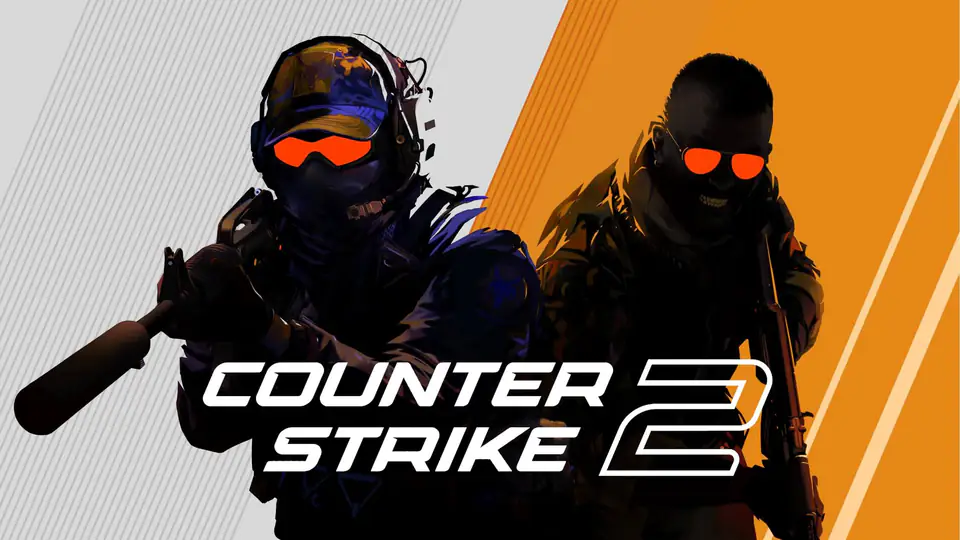
Counter-Strike 2
| Preset | GeForce RTX 4070 Ti | TITAN V CEO Edition |
|---|---|---|
| 1080p | ||
| low | 664 FPS | 379 FPS |
| medium | 539 FPS | 338 FPS |
| high | 415 FPS | 252 FPS |
| ultra | 366 FPS | 207 FPS |
| 1440p | ||
| low | 496 FPS | 255 FPS |
| medium | 400 FPS | 220 FPS |
| high | 329 FPS | 172 FPS |
| ultra | 269 FPS | 139 FPS |
| 4K | ||
| low | 250 FPS | 126 FPS |
| medium | 211 FPS | 104 FPS |
| high | 187 FPS | 87 FPS |
| ultra | 159 FPS | 67 FPS |

League of Legends
| Preset | GeForce RTX 4070 Ti | TITAN V CEO Edition |
|---|---|---|
| 1080p | ||
| low | 921 FPS | 764 FPS |
| medium | 742 FPS | 612 FPS |
| high | 652 FPS | 510 FPS |
| ultra | 569 FPS | 382 FPS |
| 1440p | ||
| low | 720 FPS | 573 FPS |
| medium | 578 FPS | 459 FPS |
| high | 497 FPS | 382 FPS |
| ultra | 427 FPS | 287 FPS |
| 4K | ||
| low | 498 FPS | 382 FPS |
| medium | 403 FPS | 306 FPS |
| high | 352 FPS | 255 FPS |
| ultra | 296 FPS | 191 FPS |

Valorant
| Preset | GeForce RTX 4070 Ti | TITAN V CEO Edition |
|---|---|---|
| 1080p | ||
| low | 879 FPS | 313 FPS |
| medium | 731 FPS | 275 FPS |
| high | 664 FPS | 228 FPS |
| ultra | 600 FPS | 197 FPS |
| 1440p | ||
| low | 706 FPS | 239 FPS |
| medium | 585 FPS | 215 FPS |
| high | 514 FPS | 179 FPS |
| ultra | 460 FPS | 152 FPS |
| 4K | ||
| low | 477 FPS | 144 FPS |
| medium | 408 FPS | 125 FPS |
| high | 366 FPS | 99 FPS |
| ultra | 324 FPS | 81 FPS |
Technical Specifications
Side-by-side comparison of GeForce RTX 4070 Ti and TITAN V CEO Edition

GeForce RTX 4070 Ti
GeForce RTX 4070 Ti
The GeForce RTX 4070 Ti is manufactured by NVIDIA. It was released in January 3 2023. It features the Ada Lovelace architecture. The core clock ranges from 2310 MHz to 2610 MHz. It has 7680 shading units. The thermal design power (TDP) is 285W. Manufactured using 4 nm process technology. It features 60 dedicated ray tracing cores for enhanced lighting effects. G3D Mark benchmark score: 31,578 points. Launch price was $799.
TITAN V CEO Edition
TITAN V CEO Edition
The TITAN V CEO Edition is manufactured by NVIDIA. It was released in June 21 2018. It features the Volta architecture. The core clock ranges from 1200 MHz to 1455 MHz. It has 5120 shading units. The thermal design power (TDP) is 250W. Manufactured using 12 nm process technology. G3D Mark benchmark score: 16,988 points.
Graphics Performance
In G3D Mark, the GeForce RTX 4070 Ti scores 31,578 versus the TITAN V CEO Edition's 16,988 — the GeForce RTX 4070 Ti leads by 85.9%. The GeForce RTX 4070 Ti is built on Ada Lovelace while the TITAN V CEO Edition uses Volta, both on 4 nm vs 12 nm. Shader units: 7,680 (GeForce RTX 4070 Ti) vs 5,120 (TITAN V CEO Edition). Raw compute: 40.09 TFLOPS (GeForce RTX 4070 Ti) vs 14.9 TFLOPS (TITAN V CEO Edition). Boost clocks: 2610 MHz vs 1455 MHz.
| Feature | GeForce RTX 4070 Ti | TITAN V CEO Edition |
|---|---|---|
| G3D Mark Score | 31,578+86% | 16,988 |
| Architecture | Ada Lovelace | Volta |
| Process Node | 4 nm | 12 nm |
| Shading Units | 7680+50% | 5120 |
| Compute (TFLOPS) | 40.09 TFLOPS+169% | 14.9 TFLOPS |
| Boost Clock | 2610 MHz+79% | 1455 MHz |
| ROPs | 80 | 128+60% |
| TMUs | 240 | 320+33% |
| L1 Cache | 7.5 MB | 10 MB+33% |
| L2 Cache | 48 MB+700% | 6 MB |
| Tensor Cores | 240 | 640+167% |
Advanced Features (DLSS/FSR)
A critical advantage for the GeForce RTX 4070 Ti is support for DLSS 3.5 + Frame Generation. This allows it to generate entire frames using AI/Algorithms, essentially doubling the frame rate in CPU-bound scenarios or heavy ray-tracing titles. The TITAN V CEO Edition lacks specific hardware/driver support for this native frame generation tier.The GeForce RTX 4070 Ti gives access to NVIDIA DLSS (Deep Learning Super Sampling), widely regarding as the superior upscaling method for image quality. The TITAN V CEO Edition relies on FSR (FidelityFX Super Resolution), which is capable but generally slightly noisier than DLSS in motion.
| Feature | GeForce RTX 4070 Ti | TITAN V CEO Edition |
|---|---|---|
| Upscaling Tech | DLSS 3.5 Super Resolution | Upscaling support |
| Frame Generation | DLSS 3.5 + Frame Generation | Not Supported |
| Ray Reconstruction | Yes (DLSS 3.5) | No |
| Low Latency | NVIDIA Reflex | Standard |
Video Memory (VRAM)
The GeForce RTX 4070 Ti comes with 12 GB of VRAM, while the TITAN V CEO Edition has 31 GB. The TITAN V CEO Edition offers 160.4% more capacity, crucial for higher resolutions and texture-heavy games. Memory bandwidth: 504 GB/s (GeForce RTX 4070 Ti) vs 868 GB/s (TITAN V CEO Edition) — a 72.2% advantage for the TITAN V CEO Edition. Bus width: 192-bit vs 4096-bit. L2 Cache: 48 MB (GeForce RTX 4070 Ti) vs 6 MB (TITAN V CEO Edition) — the GeForce RTX 4070 Ti has significantly larger on-die cache to reduce VRAM reliance.
| Feature | GeForce RTX 4070 Ti | TITAN V CEO Edition |
|---|---|---|
| VRAM Capacity | 12 GB | 31.25 GB+160% |
| Memory Type | GDDR6X | HBM2 |
| Memory Bandwidth | 504 GB/s | 868 GB/s+72% |
| Bus Width | 192-bit | 4096-bit+2033% |
| L2 Cache | 48 MB+700% | 6 MB |
Display & API Support
DirectX support: 12 Ultimate (GeForce RTX 4070 Ti) vs 12.0 (TITAN V CEO Edition). Vulkan: 1.3 vs 1.1. OpenGL: 4.6 vs 4.5. Maximum simultaneous displays: 4 vs 4.
| Feature | GeForce RTX 4070 Ti | TITAN V CEO Edition |
|---|---|---|
| DirectX | 12 Ultimate | 12.0 |
| Vulkan | 1.3+18% | 1.1 |
| OpenGL | 4.6+2% | 4.5 |
| Max Displays | 4 | 4 |
Media & Encoding
Hardware encoder: NVENC (8th Gen) (GeForce RTX 4070 Ti) vs VCN 6.0 (TITAN V CEO Edition). Decoder: NVDEC (5th Gen) vs PureVideo HD VP9. Supported codecs: AV1,H.264,H.265,VP9 (GeForce RTX 4070 Ti) vs MPEG-2,H.264,HEVC,VP9 (TITAN V CEO Edition).
| Feature | GeForce RTX 4070 Ti | TITAN V CEO Edition |
|---|---|---|
| Encoder | NVENC (8th Gen) | VCN 6.0 |
| Decoder | NVDEC (5th Gen) | PureVideo HD VP9 |
| Codecs | AV1,H.264,H.265,VP9 | MPEG-2,H.264,HEVC,VP9 |
Power & Dimensions
The GeForce RTX 4070 Ti draws 285W versus the TITAN V CEO Edition's 250W — a 13.1% difference. The TITAN V CEO Edition is more power-efficient. Recommended PSU: 700W (GeForce RTX 4070 Ti) vs 600W (TITAN V CEO Edition). Power connectors: 8-pin vs 6-pin + 8-pin. Card length: 285mm vs 267mm, occupying 2 vs 2 slots. Typical load temperature: 70°C vs 85°C.
| Feature | GeForce RTX 4070 Ti | TITAN V CEO Edition |
|---|---|---|
| TDP | 285W | 250W-12% |
| Recommended PSU | 700W | 600W-14% |
| Power Connector | 8-pin | 6-pin + 8-pin |
| Length | 285mm | 267mm |
| Height | 112mm | 112mm |
| Slots | 2 | 2 |
| Temp (Load) | 70°C-18% | 85°C |
| Perf/Watt | 110.8+63% | 68.0 |
Value Analysis
The GeForce RTX 4070 Ti launched at $799 MSRP, while the TITAN V CEO Edition launched at $0. The TITAN V CEO Edition costs 100+% less ($799 savings) on MSRP. Performance per dollar on MSRP (G3D Mark / MSRP): 39.5 (GeForce RTX 4070 Ti) vs Infinity (TITAN V CEO Edition) — the TITAN V CEO Edition offers Infinity% better value. The GeForce RTX 4070 Ti is the newer GPU (2023 vs 2018).
| Feature | GeForce RTX 4070 Ti | TITAN V CEO Edition |
|---|---|---|
| MSRP | $799 | $0-100% |
| Performance per Dollar | 39.5 | Infinity |
| Codename | AD104 | GV100 |
| Release | January 3 2023 | June 21 2018 |
| Ranking | #11 | #115 |
Top Performing GPUs
The most powerful gpus ranked by G3D Mark benchmark scores.

You May Also Compare
Similar GPU comparisons based on GeForce RTX 4070 Ti and TITAN V CEO Edition