




GeForce RTX 2080 (móvel)
Popular choices:
Radeon RX 6650M
Popular choices:
Performance Spectrum - GPU
About G3D Mark
G3D Mark is a standard benchmark that measures graphics performance in real-world gaming scenarios. It simplifies comparing cards from different brands, where higher scores directly correlate with better fps and smoother gaming experiences.
Head-to-Head Verdict, Benchmarks, Value & Long-Term Outlook
This comparison brings together gaming FPS, raw graphics performance, VRAM, feature set, power efficiency, pricing context, and long-term value so you can see which GPU actually makes more sense.
GeForce RTX 2080 (móvel)
2019Why buy it
- ✅Delivers 100+% more G3D Mark for each dollar spent, at 15.0 vs 0 G3D/$ ($1,000 MSRP vs Unknown MSRP).
- ✅Access to DLSS 2 Super Resolution (2020).
Trade-offs
- ❌No equivalent frame-generation stack like FSR Frame Generation + AFMF (2023).
- ❌Weaker long-term outlook: Radeon RX 6650M is the safer future-proof pick thanks to newer hardware and better gaming feature support.
- ❌25% higher power demand at 150W vs 120W.
Radeon RX 6650M
2022Why buy it
- ✅Access to a newer frame-generation stack with FSR Frame Generation + AFMF (2023).
- ✅More future proof: RDNA 2.0 on 7nm with a newer platform for upcoming games.
- ✅Draws 120W instead of 150W, a 30W reduction.
Trade-offs
- ❌No DLSS support; it relies on FSR 3 (2023) instead.
- ❌Lower G3D Mark per dollar, at 0 vs 15.0 G3D/$ (Unknown MSRP vs $1,000 MSRP).
GeForce RTX 2080 (móvel)
2019Radeon RX 6650M
2022Why buy it
- ✅Delivers 100+% more G3D Mark for each dollar spent, at 15.0 vs 0 G3D/$ ($1,000 MSRP vs Unknown MSRP).
- ✅Access to DLSS 2 Super Resolution (2020).
Why buy it
- ✅Access to a newer frame-generation stack with FSR Frame Generation + AFMF (2023).
- ✅More future proof: RDNA 2.0 on 7nm with a newer platform for upcoming games.
- ✅Draws 120W instead of 150W, a 30W reduction.
Trade-offs
- ❌No equivalent frame-generation stack like FSR Frame Generation + AFMF (2023).
- ❌Weaker long-term outlook: Radeon RX 6650M is the safer future-proof pick thanks to newer hardware and better gaming feature support.
- ❌25% higher power demand at 150W vs 120W.
Trade-offs
- ❌No DLSS support; it relies on FSR 3 (2023) instead.
- ❌Lower G3D Mark per dollar, at 0 vs 15.0 G3D/$ (Unknown MSRP vs $1,000 MSRP).
Quick Answers
So, is Radeon RX 6650M better than GeForce RTX 2080 (móvel)?
Which one is more future-proof for 2026 and beyond?
Which one is the smarter buy today, not just the cheaper card?
Is GeForce RTX 2080 (móvel) still worth buying for gaming in 2026?
Games Benchmarks
Real-world benchmarks and performance projections based on comprehensive hardware analysis and comparative metrics. Values represent expected performance on High/Ultra settings at 1080p, 1440p, and 4K. Modeled using a Ryzen 7 9800X3D reference profile to minimize specific CPU bottlenecks.
Note: Performance behavior can vary per game. Specific architectures may perform better or worse depending on game engine optimizations and API implementation.
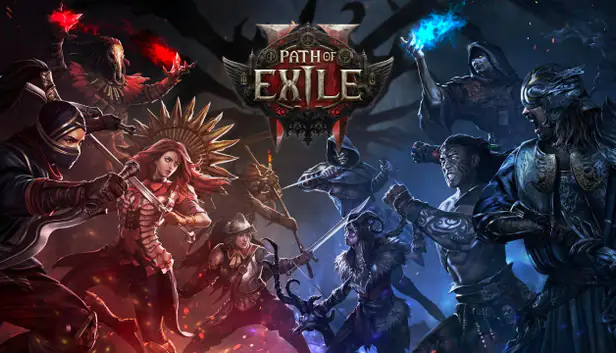
Path of Exile 2
| Preset | GeForce RTX 2080 (móvel) | Radeon RX 6650M |
|---|---|---|
| 1080p | ||
| low | 153 FPS | 167 FPS |
| medium | 137 FPS | 148 FPS |
| high | 118 FPS | 131 FPS |
| ultra | 100 FPS | 111 FPS |
| 1440p | ||
| low | 131 FPS | 140 FPS |
| medium | 107 FPS | 113 FPS |
| high | 91 FPS | 101 FPS |
| ultra | 82 FPS | 91 FPS |
| 4K | ||
| low | 76 FPS | 84 FPS |
| medium | 65 FPS | 71 FPS |
| high | 49 FPS | 58 FPS |
| ultra | 43 FPS | 50 FPS |
Counter-Strike 2
| Preset | GeForce RTX 2080 (móvel) | Radeon RX 6650M |
|---|---|---|
| 1080p | ||
| low | 380 FPS | 306 FPS |
| medium | 333 FPS | 253 FPS |
| high | 272 FPS | 199 FPS |
| ultra | 232 FPS | 155 FPS |
| 1440p | ||
| low | 253 FPS | 193 FPS |
| medium | 215 FPS | 158 FPS |
| high | 186 FPS | 124 FPS |
| ultra | 155 FPS | 99 FPS |
| 4K | ||
| low | 123 FPS | 103 FPS |
| medium | 106 FPS | 83 FPS |
| high | 89 FPS | 69 FPS |
| ultra | 70 FPS | 53 FPS |

League of Legends
| Preset | GeForce RTX 2080 (móvel) | Radeon RX 6650M |
|---|---|---|
| 1080p | ||
| low | 676 FPS | 683 FPS |
| medium | 541 FPS | 546 FPS |
| high | 450 FPS | 455 FPS |
| ultra | 338 FPS | 341 FPS |
| 1440p | ||
| low | 507 FPS | 512 FPS |
| medium | 405 FPS | 410 FPS |
| high | 338 FPS | 341 FPS |
| ultra | 253 FPS | 256 FPS |
| 4K | ||
| low | 338 FPS | 341 FPS |
| medium | 270 FPS | 273 FPS |
| high | 225 FPS | 228 FPS |
| ultra | 169 FPS | 171 FPS |

Valorant
| Preset | GeForce RTX 2080 (móvel) | Radeon RX 6650M |
|---|---|---|
| 1080p | ||
| low | 514 FPS | 505 FPS |
| medium | 448 FPS | 423 FPS |
| high | 384 FPS | 352 FPS |
| ultra | 318 FPS | 294 FPS |
| 1440p | ||
| low | 420 FPS | 389 FPS |
| medium | 367 FPS | 324 FPS |
| high | 299 FPS | 255 FPS |
| ultra | 245 FPS | 207 FPS |
| 4K | ||
| low | 271 FPS | 224 FPS |
| medium | 254 FPS | 181 FPS |
| high | 222 FPS | 168 FPS |
| ultra | 169 FPS | 130 FPS |
Technical Specifications
Side-by-side comparison of GeForce RTX 2080 (móvel) and Radeon RX 6650M

GeForce RTX 2080 (móvel)
GeForce RTX 2080 (móvel)
The GeForce RTX 2080 (móvel) is manufactured by NVIDIA. It was released in January 29 2019. It features the Turing architecture. The core clock ranges from 1380 MHz to 1590 MHz. It has 2944 shading units. The thermal design power (TDP) is 150W. Manufactured using 12 nm process technology. It features 46 dedicated ray tracing cores for enhanced lighting effects. G3D Mark benchmark score: 15,014 points.
Radeon RX 6650M
Radeon RX 6650M
The Radeon RX 6650M is manufactured by AMD. It was released in January 4 2022. It features the RDNA 2.0 architecture. The core clock ranges from 2068 MHz to 2416 MHz. It has 1792 shading units. The thermal design power (TDP) is 120W. Manufactured using 7 nm process technology. It features 28 dedicated ray tracing cores for enhanced lighting effects. G3D Mark benchmark score: 15,171 points.
Graphics Performance
The GeForce RTX 2080 (móvel) scores 15,014 and the Radeon RX 6650M reaches 15,171 in the G3D Mark benchmark — just a 1% difference, making them near-identical in rasterization performance. The GeForce RTX 2080 (móvel) is built on Turing while the Radeon RX 6650M uses RDNA 2.0, both on 12 nm vs 7 nm. Shader units: 2,944 (GeForce RTX 2080 (móvel)) vs 1,792 (Radeon RX 6650M). Raw compute: 9.362 TFLOPS (GeForce RTX 2080 (móvel)) vs 8.659 TFLOPS (Radeon RX 6650M). Boost clocks: 1590 MHz vs 2416 MHz. Ray tracing: 46 RT cores (GeForce RTX 2080 (móvel)) vs 28 (Radeon RX 6650M) with 368 Tensor cores.
| Feature | GeForce RTX 2080 (móvel) | Radeon RX 6650M |
|---|---|---|
| G3D Mark Score | 15,014 | 15,171+1% |
| Architecture | Turing | RDNA 2.0 |
| Process Node | 12 nm | 7 nm |
| Shading Units | 2944+64% | 1792 |
| Compute (TFLOPS) | 9.362 TFLOPS+8% | 8.659 TFLOPS |
| Boost Clock | 1590 MHz | 2416 MHz+52% |
| ROPs | 64 | 64 |
| TMUs | 184+64% | 112 |
| L1 Cache | 2.9 MB+480% | 0.5 MB |
| L2 Cache | 4 MB+100% | 2 MB |
| Ray Tracing Cores | 46+64% | 28 |
Advanced Features (DLSS/FSR)
A critical advantage for the Radeon RX 6650M is support for FSR Frame Generation + AFMF. This allows it to generate entire frames using AI/Algorithms, essentially doubling the frame rate in CPU-bound scenarios or heavy ray-tracing titles. The GeForce RTX 2080 (móvel) lacks specific hardware/driver support for this native frame generation tier.The GeForce RTX 2080 (móvel) gives access to NVIDIA DLSS (Deep Learning Super Sampling), widely regarding as the superior upscaling method for image quality. The Radeon RX 6650M relies on FSR (FidelityFX Super Resolution), which is capable but generally slightly noisier than DLSS in motion.
| Feature | GeForce RTX 2080 (móvel) | Radeon RX 6650M |
|---|---|---|
| Upscaling Tech | DLSS 2 Super Resolution | FSR 3 |
| Frame Generation | Not Supported | FSR Frame Generation + AFMF |
| Ray Reconstruction | No | No |
| Low Latency | NVIDIA Reflex | AMD Anti-Lag |
Video Memory (VRAM)
Both cards feature 8 GB of GDDR6. Memory bandwidth: 448 GB/s (GeForce RTX 2080 (móvel)) vs 224 GB/s (Radeon RX 6650M) — a 100% advantage for the GeForce RTX 2080 (móvel). Bus width: 256-bit vs 128-bit. L2 Cache: 4 MB (GeForce RTX 2080 (móvel)) vs 2 MB (Radeon RX 6650M) — the GeForce RTX 2080 (móvel) has significantly larger on-die cache to reduce VRAM reliance.
| Feature | GeForce RTX 2080 (móvel) | Radeon RX 6650M |
|---|---|---|
| VRAM Capacity | 8 GB | 8 GB |
| Memory Type | GDDR6 | GDDR6 |
| Memory Bandwidth | 448 GB/s+100% | 224 GB/s |
| Bus Width | 256-bit+100% | 128-bit |
| L2 Cache | 4 MB+100% | 2 MB |
Display & API Support
DirectX support: 12.2 (GeForce RTX 2080 (móvel)) vs 12.2 (Radeon RX 6650M). Vulkan: 1.1 vs 1.4. OpenGL: 4.6 vs 4.6. Maximum simultaneous displays: 4 vs 1.
| Feature | GeForce RTX 2080 (móvel) | Radeon RX 6650M |
|---|---|---|
| DirectX | 12.2 | 12.2 |
| Vulkan | 1.1 | 1.4+27% |
| OpenGL | 4.6 | 4.6 |
| Max Displays | 4+300% | 1 |
Media & Encoding
Hardware encoder: 7th Gen NVENC (GeForce RTX 2080 (móvel)) vs VCN 3.0 (Radeon RX 6650M). Decoder: 5th Gen NVDEC vs VCN 3.0. Supported codecs: MPEG-2,H.264,HEVC,VP9 (GeForce RTX 2080 (móvel)) vs MPEG-2,H.264,HEVC,VP9 (Radeon RX 6650M).
| Feature | GeForce RTX 2080 (móvel) | Radeon RX 6650M |
|---|---|---|
| Encoder | 7th Gen NVENC | VCN 3.0 |
| Decoder | 5th Gen NVDEC | VCN 3.0 |
| Codecs | MPEG-2,H.264,HEVC,VP9 | MPEG-2,H.264,HEVC,VP9 |
Power & Dimensions
The GeForce RTX 2080 (móvel) draws 150W versus the Radeon RX 6650M's 120W — a 22.2% difference. The Radeon RX 6650M is more power-efficient. Recommended PSU: 650W (GeForce RTX 2080 (móvel)) vs 650W (Radeon RX 6650M). Power connectors: PCIe-powered vs Mobile. Card length: 0mm vs 0mm, occupying 0 vs 0 slots. Typical load temperature: 85°C vs 80°C.
| Feature | GeForce RTX 2080 (móvel) | Radeon RX 6650M |
|---|---|---|
| TDP | 150W | 120W-20% |
| Recommended PSU | 650W | 650W |
| Power Connector | PCIe-powered | Mobile |
| Length | 0mm | 0mm |
| Height | 0mm | 0mm |
| Slots | 0 | 0 |
| Temp (Load) | 85°C | 80°C-6% |
| Perf/Watt | 100.1 | 126.4+26% |
Value Analysis
The Radeon RX 6650M is the newer GPU (2022 vs 2019).
| Feature | GeForce RTX 2080 (móvel) | Radeon RX 6650M |
|---|---|---|
| MSRP | $1000 | — |
| Codename | TU104B | Navi 23 |
| Release | January 29 2019 | January 4 2022 |
| Ranking | #146 | #148 |
Top Performing GPUs
The most powerful gpus ranked by G3D Mark benchmark scores.

You May Also Compare
Similar GPU comparisons based on GeForce RTX 2080 (móvel) and Radeon RX 6650M